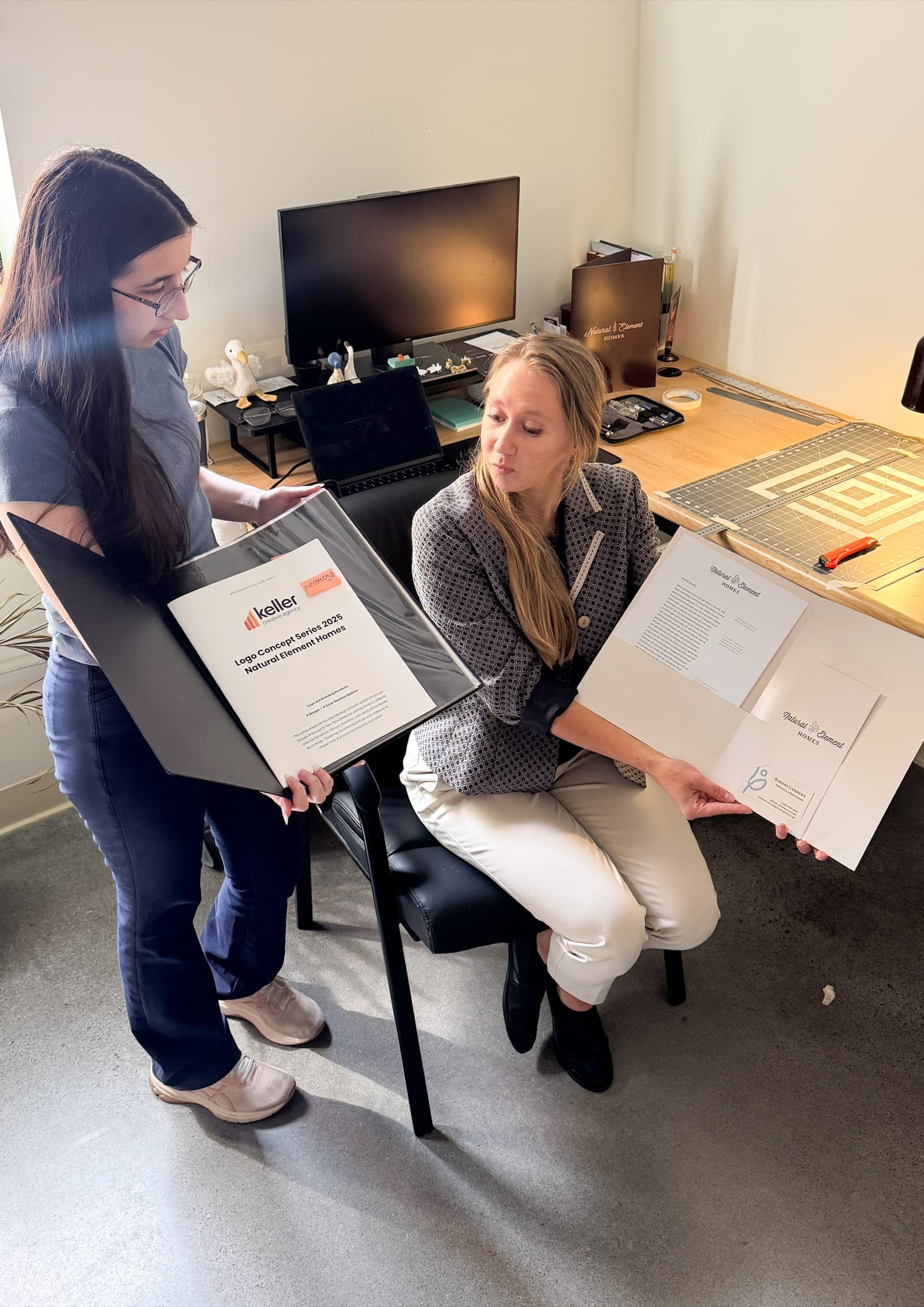
By The Keller Creative Team
Yes, direct mail marketing is still worth it for a lot of Knoxville businesses, as long as you treat it like a targeted tool and not a spray-and-pray gamble. A well-made postcard sent to the right neighborhoods still gets opened, held, and acted on in a way a banner ad rarely does. The catch is that mail only pays off when the list, the offer, and the follow-up all pull in the same direction. Below we cover where it works, what response to expect, what it costs, and how to pair it with digital.
Key takeaways
- Direct mail works best for local, offer-driven businesses (home services, restaurants, medical, retail) that want to reach specific neighborhoods or households.
- Response rates commonly land in the low single digits for prospect lists and noticeably higher for mailings to your own past customers, so who you mail matters more than what you mail.
- The main cost drivers are design, printing (size and paper), postage, and the mailing list, and a simple postcard is usually the most cost-effective format.
- Every Door Direct Mail (EDDM) is a USPS program that lets you blanket chosen postal routes at a lower postage rate without buying a list of names.
- Mail and digital work better together: a mailer paired with matching online ads and a trackable landing page or phone number lifts response and lets you measure results.
Where direct mail still earns its keep
Direct mail is a physical thing that lands in someone's hands. It sits on the kitchen counter, gets stuck to the fridge, or rides along in a stack of bills until someone actually reads it. An email gets deleted in a second and a social post scrolls right by, but a good postcard can sit in a house for a week.
It shines for local, geographic targeting. If you're a roofer, a dentist, an HVAC company, or a new restaurant, you can mail the exact zip codes and neighborhoods you serve and skip the rest. In our work with East Tennessee businesses, we've seen mail do its best work for offers tied to a place: a grand opening in Farragut, a seasonal service reminder across West Knoxville, a new-mover welcome around a growing subdivision.
It also reaches people who are hard to touch online. Older customers, households that don't engage with social media, and anyone running an ad blocker still check the mailbox. For some audiences, print is the most reliable way in the door. Our guide to print marketing ideas for local businesses walks through formats beyond the postcard.
What response rate can you realistically expect
Let's be plain about the math. Most direct mail campaigns get a response rate in the low single digits. A cold prospect list, people who've never heard of you, often responds at around one to two percent. A "house list" of your own past customers or leads can do several times better, because they already know your name. Anyone promising twenty percent is selling something.
That may sound low until you run it against your own numbers. Mail 5,000 postcards, and even a one to two percent response is 50 to 100 people reaching out. For a home-services business, a single new customer can be worth hundreds or thousands of dollars over time. The percentage isn't really the point. What matters is whether the revenue from those responses clears the cost of the mailing.
Who you mail matters more than what you mail
The single biggest lever on response is the list. A sharp postcard sent to the wrong households will lose to a plain one sent to the right ones. Start with your own customer list whenever you can, then build prospect lists around geography and, where it fits, household traits like income or homeownership.
What direct mail actually costs
There's no single price for a mail campaign, but the cost almost always comes from the same four buckets:
- Design. A postcard needs a clear layout, a strong headline, and one obvious offer. Good creative and brand design is what separates a piece people read from one they toss, and it's usually a one-time cost you reuse across future drops.
- Printing. Size and paper drive this. A standard postcard on decent card stock is the workhorse; larger formats, folds, and heavier stock cost more per piece. Print runs get cheaper per unit as the quantity climbs.
- Postage. Often the largest line over time. Rates depend on the piece size, weight, and the mailing program you use (standard mail, first class, or EDDM).
- The list. Renting a targeted prospect list carries a per-name cost. Mailing your own customers costs nothing extra for the data.
There's also handling: sorting, addressing, and getting everything to the post office in the right format. When we run a mailing through our commercial printing team, design, print, and mail prep move as one job, so the piece that gets designed is the piece that actually drops.
How EDDM lets you blanket a neighborhood cheaply
EDDM stands for Every Door Direct Mail, a US Postal Service program built for local businesses. Instead of buying a list of individual names and addresses, you pick postal carrier routes on a map and your piece goes to every mailbox on them. You're mailing to "postal customer," not to named people.
The trade-off is simple. You give up name-level targeting and personalization, and in exchange you get a lower postage rate and no list to buy. For a business that wants everyone in a set of neighborhoods (a pizza place, a car wash, a new clinic), that's often the cheapest way to cover a whole area. If your value depends on reaching specific named customers, a traditional targeted list is the better tool. Part of our job is helping you pick the one that fits the goal.
How to combine direct mail with digital for a real lift
Mail and digital reinforce each other when you run them together. Someone gets your postcard, sets it down, and later sees your name again in a Google or social ad. That repetition builds trust, and the second touch often closes what the first one started. Pairing a mail drop with matching digital advertising is one of the simplest ways to raise response without mailing more pieces.
The other reason to pair them is measurement. Mail has a reputation for being hard to track, but that's fixable. Put a unique phone number, QR code, or dedicated landing page URL on the piece, and every response tells you the mail sent it. We build that tracking in from the start and roll it into how we report marketing results, so you see what the campaign actually produced instead of guessing. If your goal is bodies through the door, it's also worth reading how digital ads drive foot traffic alongside a mailer.
A simple way to test it
- Pick one clear, time-limited offer.
- Mail a defined area or list you can repeat later.
- Add a trackable phone number, QR code, or landing page.
- Run light digital ads to the same area during the mail window.
- Count responses against total cost, then adjust the list, offer, or format and mail again.
Ready to grow your business with mail that pays off?
If you've been wondering whether a mailer belongs in your plan, we can help you sort out the list, the offer, and the format that fit your budget, then track what it brings in. To talk it through, book a free strategy session with Keller Creative and we'll map out a campaign built for your corner of East Tennessee.
About the author
The strategists, designers, and producers at Keller Creative, a full-service marketing, advertising, and production agency in Knoxville, Tennessee. We help East Tennessee businesses grow with work we can measure.
Related Services