A trade show booth is judged in the three seconds it takes someone to walk past it, which is why trade show printing deserves more planning than most teams give it. The banner, the table, the sell sheet someone carries back to the office, and the giveaway that ends up on a desk all have to tell the same story at different distances. This checklist covers what to print, in what order to decide, and how to get it done without a last-minute scramble.
Key takeaways
- Plan your printed pieces in three layers: seen from the aisle, read at the table, and taken home.
- Lock the booth dimensions and the show's rules first. They decide the size of everything else.
- The backdrop carries one message in large type; details belong on the table and in the handout.
- Print a sell sheet or brochure people will keep, and make sure it has a way to follow up.
- Build your print timeline backward from ship date, and leave room for one physical proof.
What should you decide before any trade show printing starts?
Before a single file goes to design, settle four things:
- Booth size and layout. A ten-foot inline booth and a twenty-foot island need completely different backdrops. Get the exact dimensions from the show kit, including ceiling height and whether you can hang anything.
- Show rules. Many venues limit sign height, ban certain adhesives, or require fire-rated fabric. Read the exhibitor manual before ordering; it is the fastest way to avoid a piece you cannot use.
- The one thing you want people to remember. Pick a single message for the booth. Every printed piece supports it. If your team cannot agree on one sentence, the backdrop will end up as a paragraph nobody reads.
- The follow-up path. Decide now how a visitor becomes a lead: a QR code to a landing page, a card they drop in a bowl, a form on a tablet. The printed pieces need to point there.
With those fixed, the checklist below goes quickly.
Layer one: what is seen from the aisle
These pieces have to be read by someone walking at a normal pace, ten to thirty feet away.
Backdrop or pop-up display
The anchor of the booth. Keep it to your name, a short line about what you do, and a strong image. Letters should be large enough to read across the aisle, which means far fewer words than feel comfortable on screen. Fabric displays photograph without glare and pack small, which matters when the booth travels.
Retractable banner stands
Tall, narrow, and cheap to ship. Use one beside the table for your main offer or a second message the backdrop does not carry. Two matching stands on either side frame the booth cleanly.
Overhead or hanging signs
Only for larger booths that allow rigging. If you have one, it carries the name and nothing else.
Our large format signage guide goes deeper on designing for distance; the same rules apply on a show floor, with the extra challenge of competing with every booth around you.
Layer two: what is read at the table
Once someone stops, the pieces at arm's length do the work.
Table cover or runner
A printed cover turns a rented folding table into part of the booth. Keep the logo centered and the color exact; the table is at eye level for anyone seated and in every photo.
Counter signs and tabletop displays
Small rigid signs for pricing, a product name, a demo schedule, or a QR code. These can carry more words than the backdrop because the reader is standing still.
Product or service sell sheets
One page, front and back, on cover stock. The front states the offer and the result; the back carries specs, options, or a short case story. A sell sheet is the single most useful printed piece at a show because it travels.
Name badges and staff pieces
Printed badges, branded lanyards, or a simple name tent for anyone presenting. Small, but they make the team look like a team.
Layer three: what gets taken home
The show ends, the booth comes down, and these are the only pieces still working.
Brochures
A folded brochure survives a tote bag and a flight better than a flyer. If your service needs explaining, this is where that explanation lives. See our guide to choosing between a brochure and a flyer for fold and paper choices.
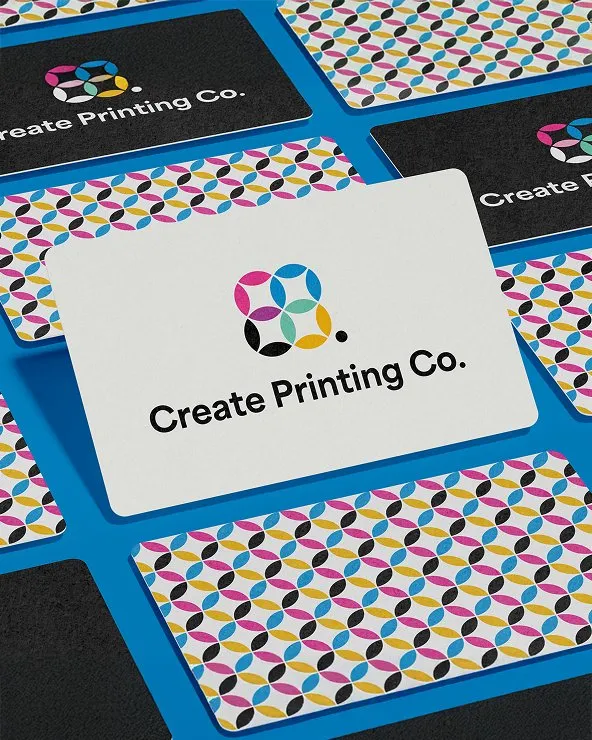
Business cards
Bring more than you think you need. A card is still the most reliable way to exchange contact information at a show, and a well-made one gets kept. Our business card guide covers stock and design.
Branded giveaways
Pens, notebooks, stickers, and drinkware are useful when they match the brand and carry a way to find you. A giveaway with a wrong-shade logo does more harm than nothing at all, so treat it as a print job with the same color proofing as the backdrop.
Follow-up postcard or offer
A small card with a show-only offer and a QR code gives visitors a reason to act after they get home, and gives you a way to measure which show produced which leads. The same idea works in direct mail to the attendee list afterward.
How do you keep every piece on-brand?
Trade show print fails most often when it is sourced from four vendors: a display company for the backdrop, an online printer for sell sheets, a promo supplier for giveaways, and a local shop for the cards. Each one interprets your blue a little differently, and the booth ends up looking like a merger.
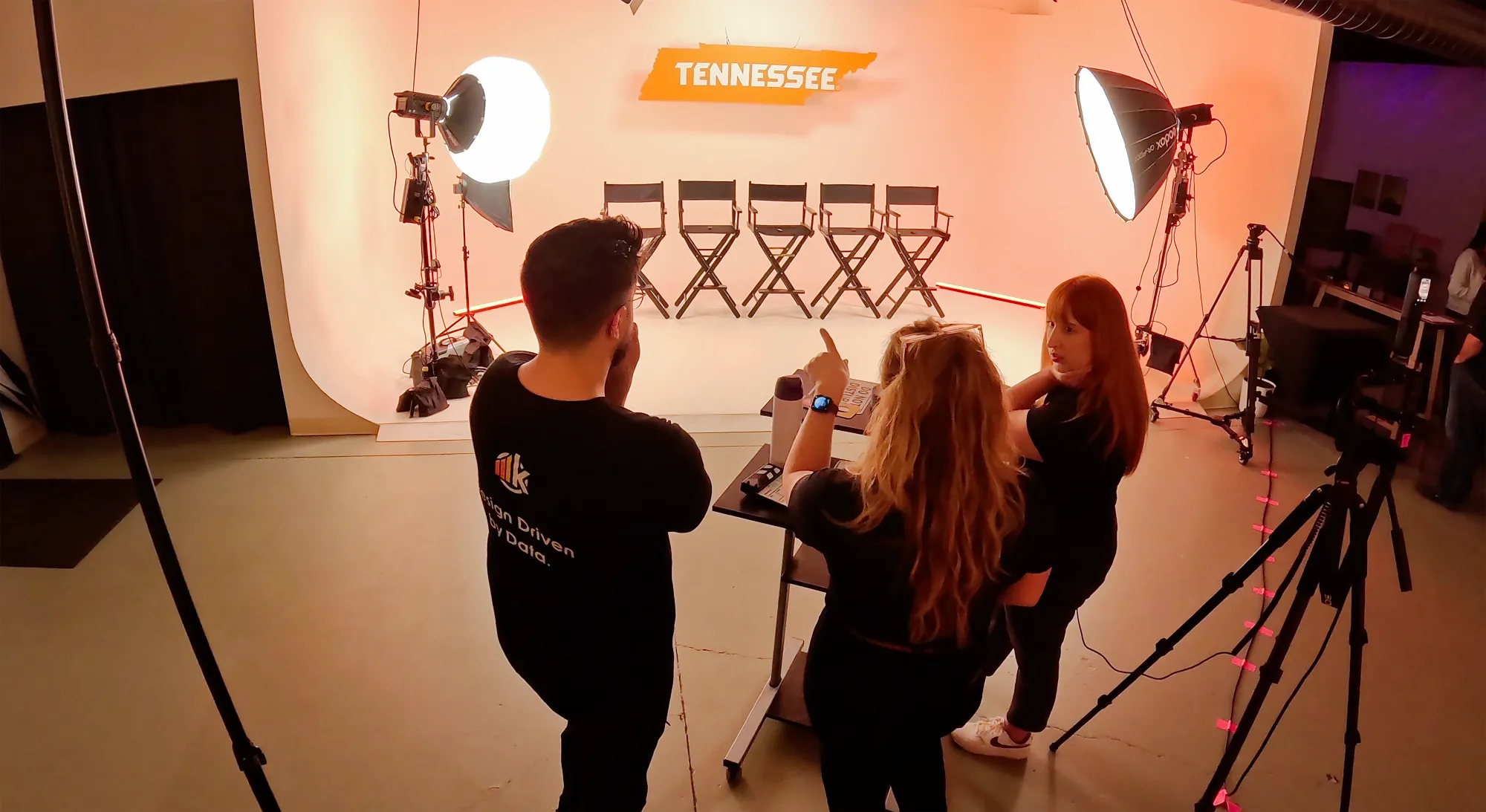
At Keller Creative our designers and our press are in the same building, so the backdrop, the sell sheet, and the cards come from the same brand file and the same color check. When a SaaS client registered for a conference at the last minute, we designed, printed, and shipped banners, sell sheets, and branded giveaways in 48 hours, and the booth matched because nothing left the building to get there.
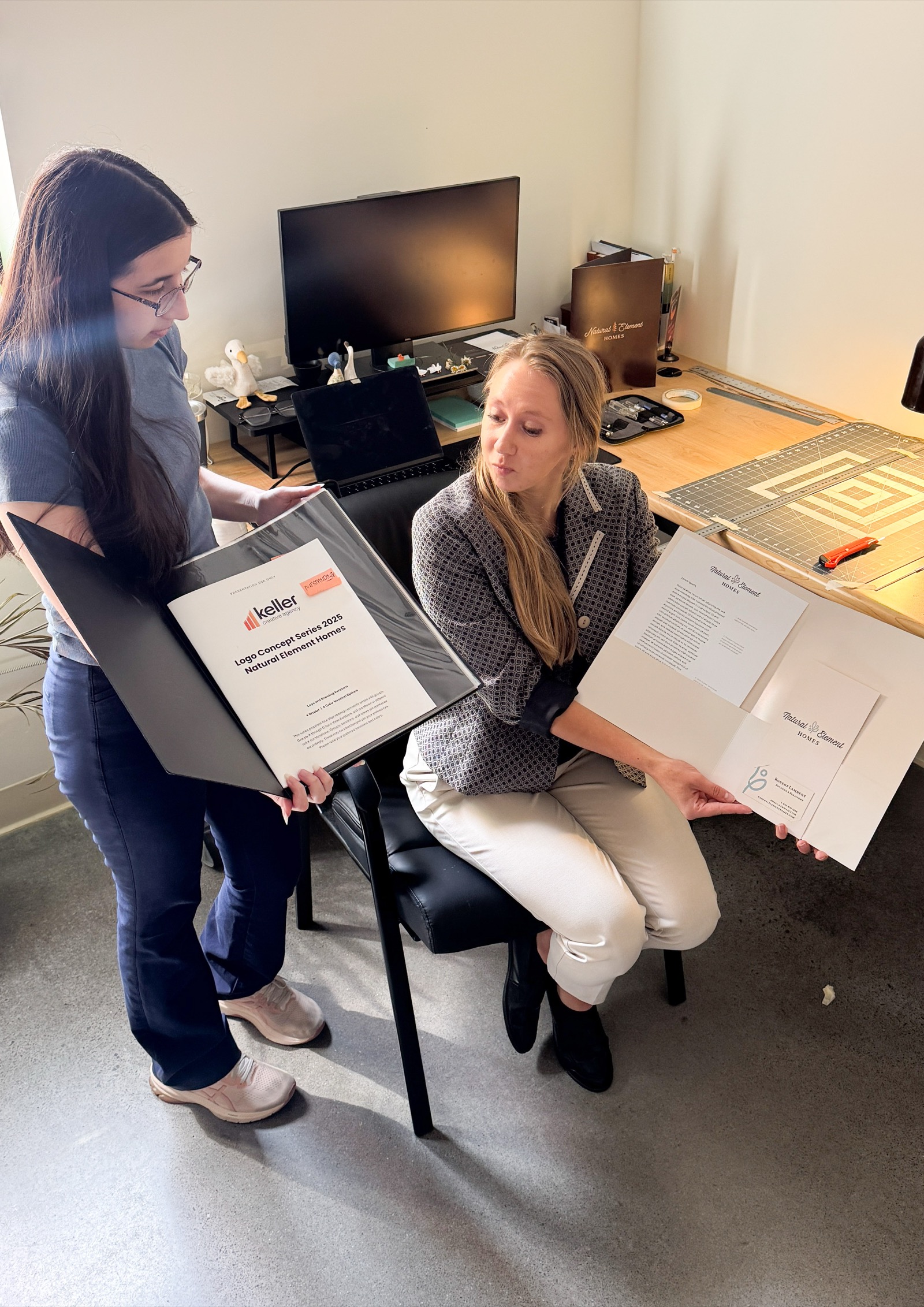
If you already have brand guidelines, send them with the job. If you do not, a short session before design starts is enough to keep the booth consistent with your website and your signage.
What does a realistic trade show print timeline look like?
Work backward from the day the materials must ship, not the day of the show:
- Six to eight weeks out: confirm booth size, rules, message, and follow-up path. Start design on the backdrop first, since it is the largest piece and the longest to produce.
- Four weeks out: approve backdrop and banner artwork. Design sell sheets, table cover, and counter signs from the same files.
- Three weeks out: physical proofs. Check color on the actual material and read the backdrop from across a room.
- Two weeks out: full production. Order giveaways and cards.
- One week out: pack, label, and ship, or load the vehicle. Keep a digital copy of every file on a phone in case something is lost in transit.
Rush timelines are possible, as the 48-hour example shows, but every week you give the job back is a week of proofing you get to keep.
Ready for your next show?
If you have a booth coming up and need a backdrop, sell sheets, cards, and giveaways that all match, we can design and print the whole set under one roof and hit the ship date. To get started, request a quote from Keller Creative with your booth size and show date.
About the author
The strategists, designers, and producers at Keller Creative, a full-service marketing, advertising, and production agency in Knoxville, Tennessee. We help East Tennessee businesses grow with work we can measure.