Large format printing is the part of your marketing that people see from a car, a sidewalk, or across a parking lot, and it fails for a reason most people never test: nobody checked whether it could be read from where it would actually hang. Banners, yard signs, window graphics, and event displays are judged in a second or two by someone who is moving. This guide covers which piece fits which job, how to design for distance, and what to ask your print shop before a sign goes up.
Key takeaways
- Large format covers anything bigger than a sheet of paper: banners, yard signs, window graphics, posters, displays, and vehicle graphics.
- Design for the distance the sign will be read from. A sign read from the road needs far larger type and far fewer words than one read at a counter.
- Material choice depends on where it lives: vinyl for outdoors, corrugated plastic for yard signs, fabric for indoor displays, perforated film for windows.
- One message per sign. If a driver cannot get the point in two seconds, the sign is doing nothing.
- Measure before you order. Wall space, window dimensions, and local sign rules decide what you can actually hang.
What counts as large format printing?
Large format printing is any print job too big for a standard press sheet, produced on wide-format equipment that prints onto roll or rigid material. In practice that means:
- Banners (vinyl or mesh) for storefronts, events, fences, and sports fields
- Yard signs on corrugated plastic with wire stakes
- Window graphics, including perforated film that reads from outside while staying see-through from inside
- Posters and wall graphics for interiors, lobbies, and retail
- Retractable and pop-up displays for trade shows and events
- A-frames and sidewalk signs for daily specials and directions
- Vehicle graphics, from a door decal to a full wrap
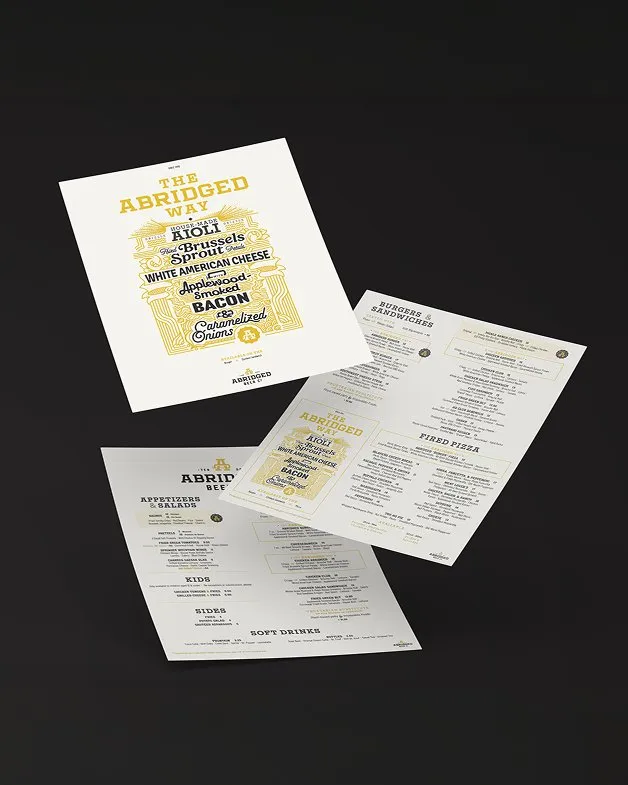
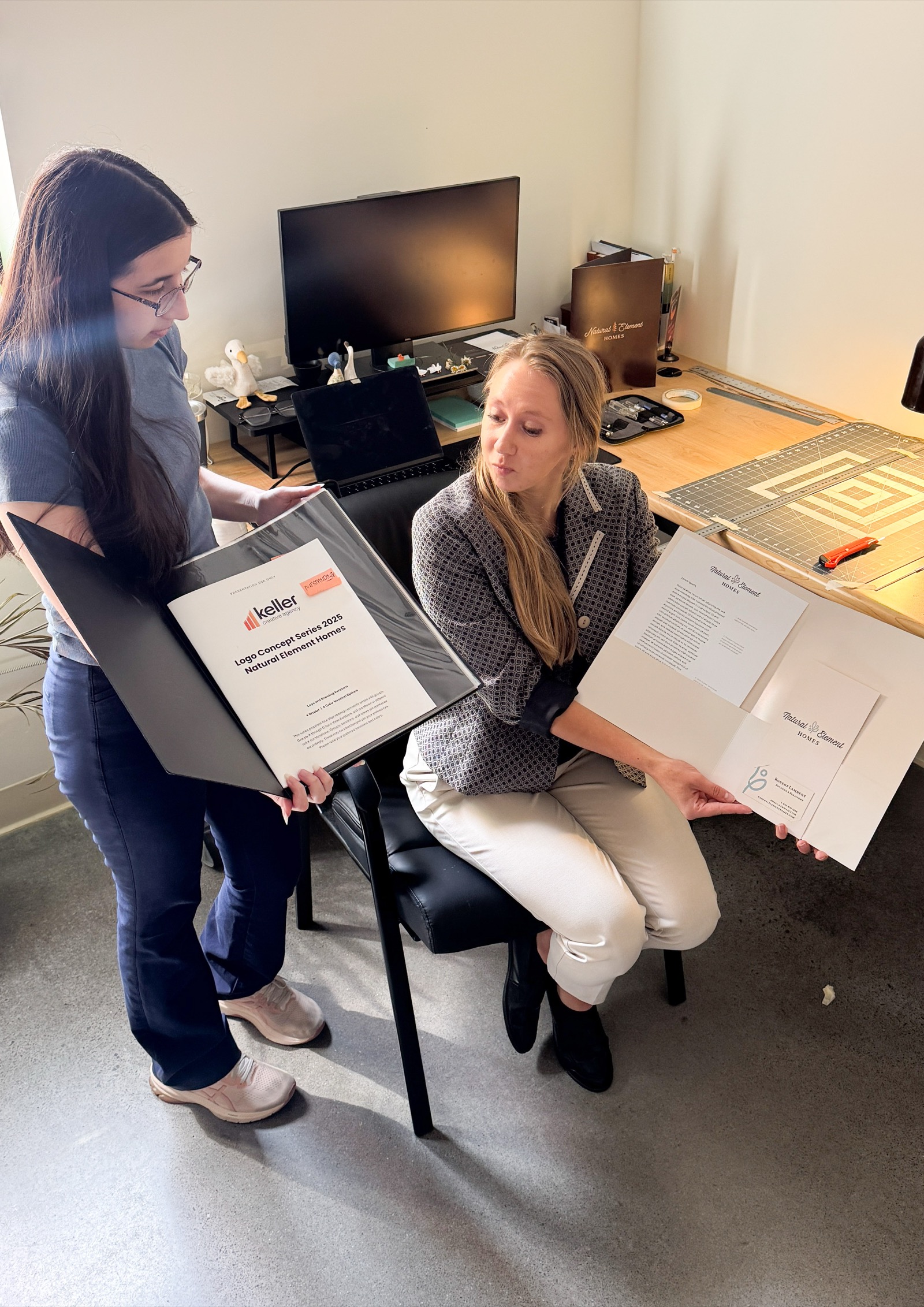
At Keller Creative we run large format signage in-house alongside the rest of our print work, so a banner, the business cards, and the brochure on the counter all come out of the same brand conversation.
How do you design a sign that can be read from a distance?
Start with the viewing distance and work backward. A rough rule many sign makers use: every inch of letter height buys about ten feet of readable distance for someone with normal vision who is paying attention. A sign meant to be read from a road at a hundred feet needs letters roughly ten inches tall, which leaves room for a handful of words and nothing else.
That math changes the design completely:
Cut the message to one idea
A banner is not a flyer. Put the one thing that matters (the name, the offer, the date, or the direction) in the largest type, and let everything else go. A phone number or web address earns a spot only if someone could reasonably stop and use it.
Use high contrast
Dark type on a light background, or the reverse, reads at distance. Mid-tone combinations that look elegant on a screen disappear in sunlight. Test your colors by shrinking the design to a thumbnail; if the words vanish, the sign will fail outdoors.
Pick a simple typeface
Thin, condensed, or decorative fonts fall apart at distance. A clean, heavy sans-serif with open letterforms is safest. Avoid all-caps for anything longer than three words, since mixed case is faster to read.
Leave margin
Edges get wrapped, grommeted, or hidden by a frame. Keep text well inside the live area and let the background run to the edge.
Which material should you choose?
The material has to survive where the sign lives, so match it to the location before thinking about looks.
- Vinyl banner is the workhorse for outdoor use. Hemmed edges and grommets let it hang on a fence or a building, and it holds color through a season of weather.
- Mesh banner lets wind pass through, which matters on a fence, a scaffold, or anywhere a solid banner would act like a sail.
- Corrugated plastic is the standard for yard signs. It is light, cheap in quantity, and stands up on wire stakes. Order double-sided if traffic comes from both directions.
- Rigid board (foam core, gator board, or aluminum composite) suits indoor displays, lobby signs, and anything that needs to stay flat and look finished up close.
- Perforated window film prints a solid image to the outside while people inside still see out. Standard window cling or vinyl works for hours, logos, and promotions that do not need the see-through effect.
- Fabric is the premium choice for trade show backdrops and indoor displays. It photographs without glare and packs small.
If you are unsure, send your printer a photo of the spot where the sign will hang. The right material is usually obvious once someone sees the wall, the window, or the fence.
How should you plan yard signs and event signage?
Yard signs work on repetition and placement. One sign at an intersection is a hint; a dozen along a route is a campaign. Keep the design identical across the run so each sighting reinforces the last, and put the most important line at the top, where grass, mud, and a passing bumper cannot hide it.
For events, think in layers: a banner or feather flag to be seen from the parking lot, a directional sign at the entrance, and a table or backdrop piece up close. Each layer carries a different amount of text, and designing them together keeps the event looking like one brand instead of three vendors.
Before ordering any outdoor sign in Knoxville or the surrounding counties, check the local sign ordinance and, if you lease, your landlord's rules. Size limits, placement setbacks, and time limits on temporary signs are common, and a sign that has to come down early is money spent for nothing.
What should you ask your print shop before you order?
A few questions up front prevent most large format regrets:
- What file resolution do you need? Large format is forgiving at distance, but logos and photos still need to be vector or high resolution. Send the original logo file, not a screenshot.
- Will you proof the actual color? Ask for a printed color swatch on the final material if brand color matters. Screens lie, especially about reds and oranges.
- How are the edges finished? Hems, grommets, pole pockets, and frames change the live area and how the piece hangs.
- What is the real turnaround? Standard large format jobs can move quickly, and rush work is possible when an event sneaks up, but say the date early.
- Can you install it, or tell me how? A banner that sags or a window graphic with bubbles undoes the design. Ask about installation before pickup.
Because our designers and our press share a building, we can answer most of these in the same conversation where we quote the job, and the brand guide stays open from the first mockup through the final proof.
How does signage fit with the rest of your marketing?
Signage is often the first physical thing a customer sees, which makes it a brand asset rather than a one-off purchase. Match the colors, type, and tone to your website, your business cards, and your social feed so that someone who saw an ad on their phone recognizes the storefront when they drive past. Our broader guide to print marketing ideas for local businesses covers how signs, direct mail, and collateral work together.
Add a measurable element where it makes sense: a short URL or a QR code on an indoor sign, a tracking phone number on a banner, or a simple "mention this sign" offer. It will not capture everyone, but it tells you whether the sign is doing anything at all.
Ready to put your brand where people will see it?
If you need a banner for an event, a run of yard signs, or window graphics that match the rest of your brand, we can design it, print it in-house, and tell you how to hang it. To get started, request a quote from Keller Creative and include a photo of where the sign will go.
About the author
The strategists, designers, and producers at Keller Creative, a full-service marketing, advertising, and production agency in Knoxville, Tennessee. We help East Tennessee businesses grow with work we can measure.