Social media content creation services sound simple until you ask what is in the box. One agency means a monthly batch of stock-photo graphics with captions; another means a camera crew at your business every two weeks and a team editing video for each platform. Both call it content creation, and the price difference is enormous. This guide explains what the service should include, how to tell the levels apart, and what questions to ask before you sign.
Key takeaways
- Content creation is the production side of social media: the photos, videos, graphics, and captions that get posted. It is not the same as management or paid ads.
- The real difference between providers is where the content comes from: original shoots at your business, or templates and stock.
- A complete service covers planning, shooting, editing for each platform, captions, and a publishing calendar.
- Ask how many shoot days are included each month and who owns the files. Both answers tell you what you are actually buying.
- Judge the service by what posts turn into (calls, bookings, orders, follows), not by how many posts you get.
What is social media content creation?
Social media content creation is the work of producing what gets posted: photos, short-form video, graphics, carousels, stories, and the captions that go with them. It sits between strategy (what to say and to whom) and management (scheduling, replying to comments, reporting).
Many businesses buy content creation on its own because production is the part they cannot do in-house. A manager or an owner can schedule posts and answer messages; what they usually lack is the time, equipment, and editing skill to make posts that look like they belong on the platform. At Keller Creative, content production is the engine inside our social program, and it is also the piece clients most often ask about by itself.
What should a content creation service include?
A complete service has five parts. If a proposal skips one, ask why.
Planning
A monthly content plan built from your goals, your calendar, and what the audience responds to. This is where each post gets a job: drive a booking, show a product, answer a question, or build familiarity. Posts without a job are the ones that get likes and nothing else, a problem we cover in Is your social media driving leads, or just likes?
Shooting
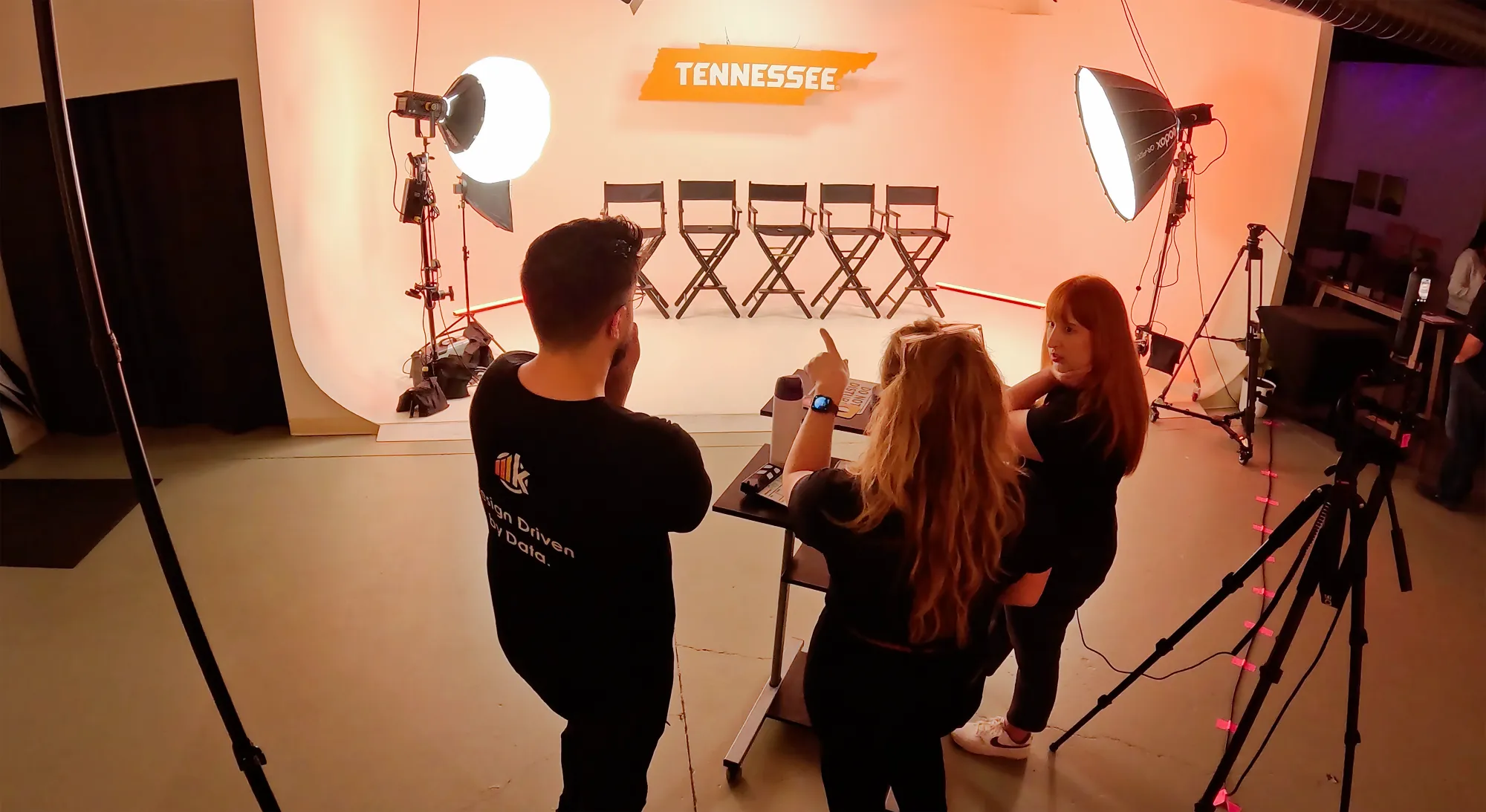
Original photo and video captured at your business, with your people and your product. This is the single biggest quality lever. Stock and templates can fill gaps, but a feed built on them looks like every other feed in your category.
Editing for each platform
A vertical reel, a square carousel, and a story frame are different deliverables, not one file cropped three ways. Editing includes hook-first cuts for short-form video, captions burned into video for silent viewing, and graphics that follow your brand guide.
Copy
Captions, hooks, on-screen text, hashtags where they still help, and a clear next step. Good copy sounds like the business, not like a marketing department.
A publishing calendar
A schedule of what posts when, approved by you before anything goes live. Some services also publish and report; others hand you the calendar and files. Either is fine, as long as you know which one you are buying.
How do content creation tiers differ?
Providers rarely use the same labels, but most offers fall into three levels.
Template-based. Branded graphics, stock imagery, and caption writing, delivered monthly. Low cost, fast, and reasonable for a business that needs a consistent presence with nothing to show. The weakness is that it is interchangeable; nobody follows a feed of quote cards.
Hybrid. A periodic shoot (often quarterly or monthly) that produces a library of photos and clips, which the team then cuts into posts over the following weeks, supplemented by graphics. This is the practical middle for most local businesses and where many of our Knoxville clients start.
Full production. Regular shoot days, a dedicated editor, platform-native video every week, and creator-style on-camera talent when the brand calls for it. This is what it takes to compete in categories where video drives decisions, such as restaurants, fitness, venues, retail, and consumer products.
The honest way to pick a tier is to ask what your customers look at before they buy. If they watch video, you need video. If they read reviews and check hours, a lighter tier may do.
What should you ask before hiring a content creator or agency?
These questions separate a production service from a posting service:
- How many shoot days are included each month, and who shoots? The answer tells you whether the content is original.
- Can I see a feed you produce for a business like mine, going back six months? Consistency over time matters more than one great reel.
- How is each piece edited for the platform? Ask to see the same shoot cut as a reel, a carousel, and a story.
- Who writes the captions, and will they learn our voice? Ask how they handle a brand with strong opinions or a regulated industry.
- Who owns the raw files and the finished posts? You should. Your pages, your photos, your video, and your data stay in your name.
- What does the monthly report show? If the answer is followers and likes only, the service is measuring itself, not your business.
How do you know the content is working?
Measure what posts turn into. For a restaurant that means reservations and orders; for a service business, calls and form fills; for a retailer, link clicks and sales. Reach and engagement still matter as leading indicators, but they are the beginning of the report, not the end.
Original content, done consistently, moves those numbers. When a Knoxville dog bar relaunched under new ownership, a steady program of on-site video and photo produced 884,000 views in the launch month, a 584 percent increase in combined Facebook and Instagram reach, and 21,436 link clicks from a single post. A cleaning-equipment retailer built on audience personas and platform-native formats reached 424,000 organic impressions in six months without boosting a single post. Those results came from content made at the business, cut for each platform, and given a job before it went out.
Posting frequency plays a part too. Our guide to how often a small business should post covers the cadence question, and social media strategy vs. a posting schedule explains why the plan matters more than the count.
Should you build content in-house or hire it out?
In-house works when someone on staff has the time, the eye, and the editing skill, and when the business is interesting enough on camera that a phone and good light are enough. Many owners start here and do well for a while.
The in-house approach usually breaks at consistency. The person doing it has another job, the shoot days get skipped in a busy month, and the feed goes quiet exactly when the business needs it most. Hiring out buys a team that shows up on schedule, a strategist, a shooter, an editor, and a writer working together, with no hiring or turnover on your side. The right answer depends on your month, and a candid conversation about what you spend now, including staff time, is the place to start.
Ready to see what your business looks like on camera?
If your feed has gone quiet, or it is busy but nothing is happening, we can plan a month of content, shoot it at your business, and show you what each post brought in. To get started, book a free social audit with Keller Creative.
About the author
The strategists, designers, and producers at Keller Creative, a full-service marketing, advertising, and production agency in Knoxville, Tennessee. We help East Tennessee businesses grow with work we can measure.