What does a marketing agency do? In plain terms, an agency plans and executes the work that gets your business in front of the right people and turns their attention into customers. That covers strategy, creative, media, and measurement, handled by specialists you would otherwise need to hire one by one. For a Knoxville shop owner or a Maryville service business, hiring an agency usually means renting a full marketing department for less than the cost of one senior hire.
Key takeaways
- A full-service marketing agency typically covers strategy, brand design, web development, digital advertising, SEO, social media, video, and print under one roof.
- Advertising agencies focus on paid media and creative; digital marketing agencies focus on online channels; full-service firms combine both plus brand and print.
- Agencies most often bill through monthly retainers, project fees, or a hybrid of the two, with retainers commonly starting a few thousand dollars a month for small businesses.
- The right time to hire an agency is usually when marketing tasks are being skipped, delayed, or handled by someone whose real job is something else.
- A good first meeting focuses on your goals and constraints, not a sales pitch for services you may not need.
The short version: what an agency actually does
An agency turns business goals into marketing work that runs on a schedule. That means someone is writing the ads, designing the landing page, editing the video, posting to Instagram, checking the analytics, and adjusting the plan based on what the numbers say. You bring the business knowledge. The agency brings the craft, the tools, and the hours.
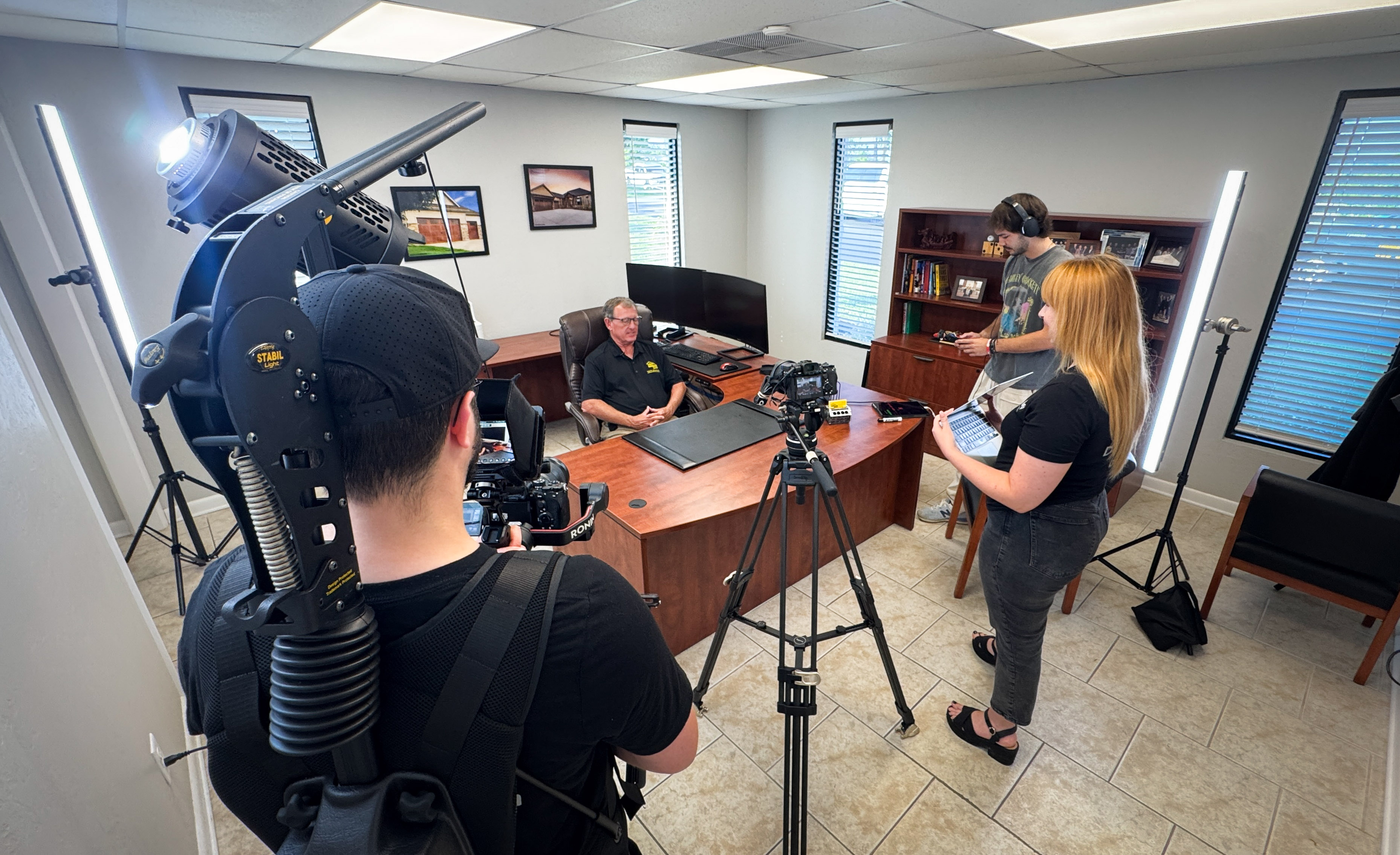
At Keller Creative, the day-to-day covers seven core areas: brand design, web development, digital advertising, social media marketing, video production, SEO and digital marketing, and commercial printing. Some clients use all of it. Most use two or three services and add others as they grow.
Here is what those services look like in practice for an East Tennessee business.
Brand design sets the visual and verbal foundation: logo, colors, typography, voice, and the guidelines that keep everything consistent whether it shows up on a truck wrap in Alcoa or an Instagram ad in Farragut.
Web development builds the site that everything else points to. If your ads and social posts send people to a slow or confusing website, the rest of the marketing budget leaks out the bottom.
Digital advertising covers Google Ads, Meta ads, YouTube, and the other paid channels. Someone writes the ad, builds the audience, sets the budget, and watches performance week over week.
Social media marketing is the ongoing work of showing up on the platforms where your customers already spend time, with content that sounds like your business and not a template.
Video production ranges from a 15-second social spot to a full commercial for local broadcast or streaming. In a region where people still watch a lot of Vols football and local news, video carries weight.
SEO and digital marketing is the work of getting found on Google without paying for every click. It is slower than ads but compounds over time.
Commercial printing covers the physical pieces: business cards, brochures, direct mail, signage, vehicle graphics. Not every business needs print, but the ones that do often need it done fast and right.
Marketing agency, advertising agency, or digital marketing agency?
The labels overlap, which is why searchers get confused. Here is the practical difference.
An advertising agency or ad agency traditionally focuses on paid media and creative campaigns: television, radio, billboards, print ads, and increasingly digital ads. The core skill is persuasion at scale.
A digital marketing agency focuses on online channels: paid search, paid social, SEO, email, and content. Some do creative work; some just run media.
A full-service marketing agency combines both, plus brand, web, and often print. The value is coordination. When one team handles your brand guidelines, your website, your ads, and your social presence, the pieces line up instead of fighting each other.
If you already have a strong brand, a solid website, and just need someone to run Google Ads, a specialist may be all you need. If you are building or rebuilding from scratch, a full-service firm usually saves time and money because you are not stitching four vendors together.
How agencies charge
Most advertising agencies use one of three billing structures.
Retainers are a fixed monthly fee for an agreed scope of ongoing work. This is common for social media management, SEO, and always-on ad campaigns. Retainers for small businesses typically start in the low thousands per month and scale with the amount of work.
Project fees are one-time costs for defined deliverables: a new website, a brand refresh, a video shoot. You know the price up front, and the engagement ends when the project ships.
Hybrid arrangements combine a smaller retainer with project fees layered on when specific work comes up. Many of our Knoxville clients start with a project, then move to a retainer once they see how the working relationship goes.
Ad spend is almost always separate from agency fees. If you budget $2,000 a month for Google Ads, that money goes to Google, not to the agency managing the campaign.
When should a small business hire a marketing agency?
Hire an agency when marketing is either not getting done or getting done poorly because no one in the building has the time or the training for it. The specific signals are easy to spot: your website is three years out of date, your social accounts have not been touched in months, your ads are running on autopilot with no one checking them, or your owner is writing Facebook posts at 10 p.m. because no one else will.
A good in-house hire is the right call when you have enough consistent work to keep one person busy full-time and a manager who can direct them. An agency is the right call when you need multiple skills (design, copy, media buying, analytics) but not 40 hours a week of each. For most small and midsize businesses in East Tennessee, that math favors the agency until the company is well into seven figures in revenue.
What a first engagement usually looks like
The first few weeks are about learning your business, not launching campaigns. A useful onboarding covers your goals, your current marketing, your customers, your competitors, and the constraints you are working within. From there, the agency builds a plan, agrees on what to measure, and starts the work.
Expect regular check-ins, monthly reporting, and honest conversations when something is not working. The best agency relationships feel like an extension of your team. You should be able to text your account lead with a question and get a real answer, not a ticket number.
Talk to a Knoxville team that does the work
If you are weighing whether an agency makes sense for your business, the fastest way to get a straight answer is a short conversation about what you are trying to accomplish and what is in your way. We serve Knoxville, Maryville, Oak Ridge, Farragut, Sevierville, Lenoir City, Alcoa, and the surrounding East Tennessee communities. Contact us today to learn more about starting a project or booking a free strategy session with Keller Creative.
About the author
The strategists, designers, and storytellers at Keller Creative, a full-service marketing and advertising agency in Knoxville, Tennessee, helping East Tennessee businesses grow.